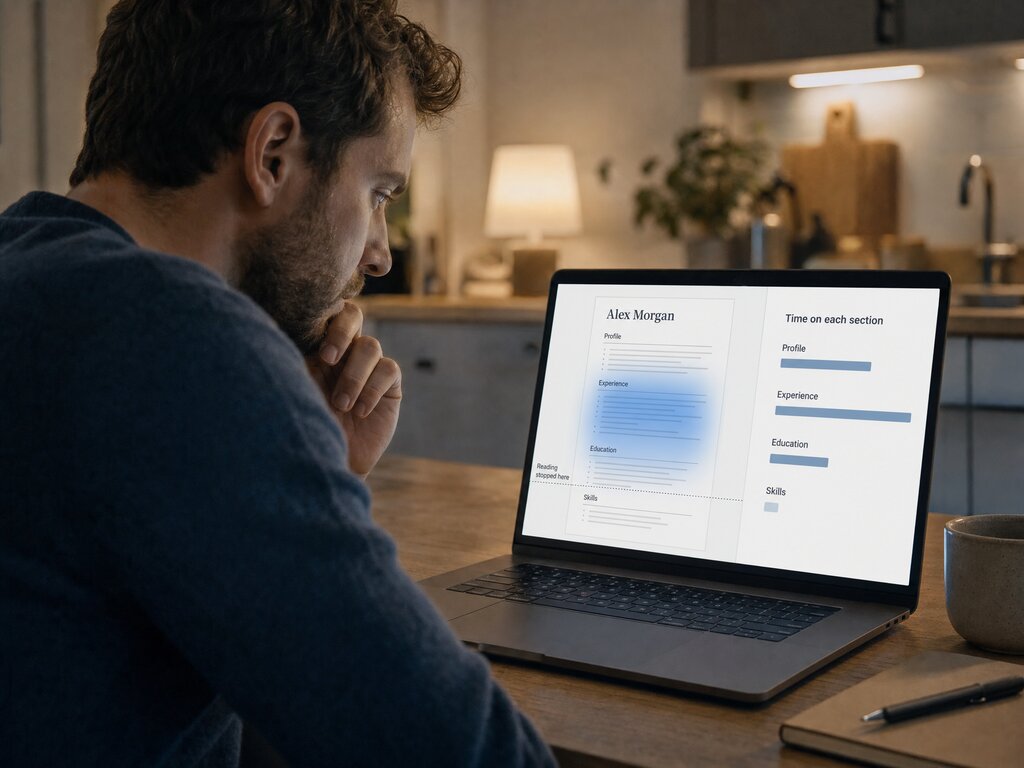
You wrote eight sections.They read two.They read two.They skimmed one.They never saw six.Interests: zero.Projects: one second.Education: three.They stopped at Skills.Skills: nine seconds.Summary: eleven.Half the page untouched.One scroll. No return.They jumped to the dates.Your best line got read.They re-read one section.They read past the fold.Thirty-eight on one.One section held them.They read to the bottom.Now you can see which.Now you can fix it.They read two.
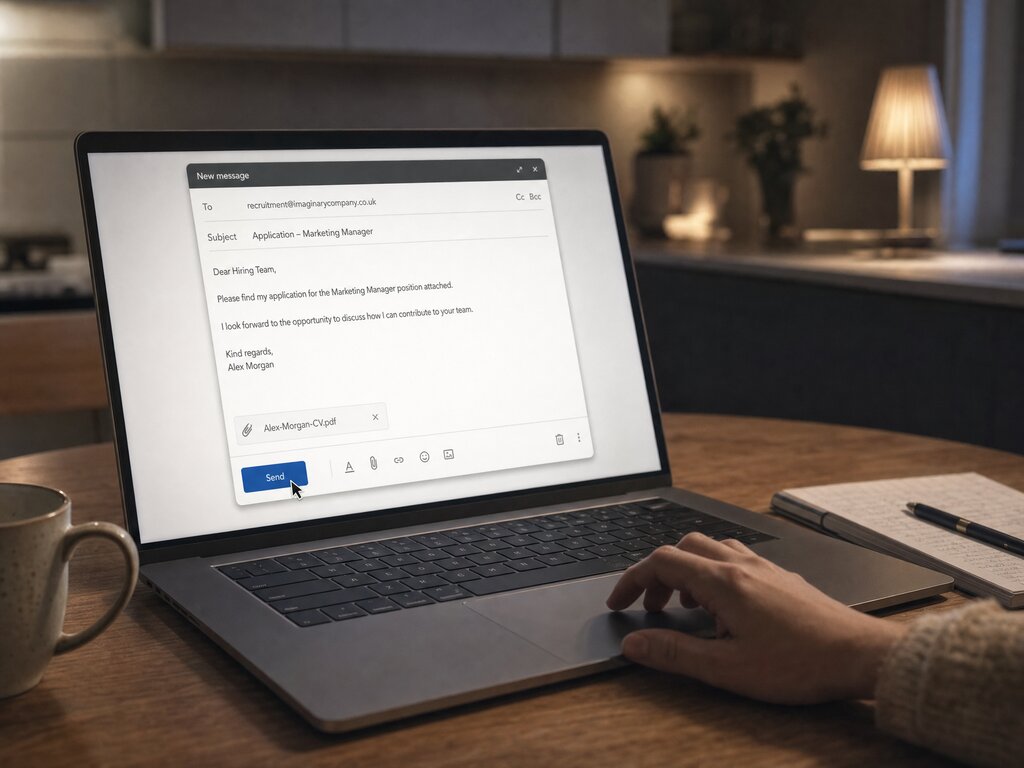
You have sent applications and heard nothing back, and nobody could tell you why. Resumetricx can. Share your CV as a link and you will see which sections a recruiter actually read, which ones they skipped, and where they stopped.
Throughline · one readinglive · 0s
Header
0s
Summary
0s
Experience
0s
Skills
0s
Projects
0s
Education
0s
Certifications
0s
Interests
0s
0scounting
An illustration of one reading. Share a tracked link and this board fills with your own.
Then you fix the part that lost them, instead of rewriting the whole thing on a hunch.
No card, no auto-renewing trial. One CV and one tracked link are free — read a real session before you decide anything.
Reading is measured on links and PDFs you send yourself. A portal upload cannot report back.
01020304050607080
01020304050607080
01020304050607080
Why you never hear back
You send it, and the loop closes.A yes, a no, or nothing at all — and never the reason.
So you rewrite the summary, move a section, change the font, and send it again — and you still have no idea whether any of it mattered.Every version is a guess, because the only thing that ever comes back is the outcome. Here is what you are missing, one beat at a time.
01
02
03
04
Step 1 of 4: You send it, and the loop closes
01
You send it, and the loop closes
The attachment leaves and that is the end of the information. Whatever happens next happens somewhere you cannot see, and the only thing that ever comes back is the outcome.
Without measurement: Rewrite the summary and hope
With Resumetricx: See the open, the device and the dwell
What was measured
3 sent · 0 back3 applications sent, 0 replies received.
02
It was open for four seconds
You imagine someone reading it properly. Recruiters move fast, and the gap between the read you picture and the read that happened is where every wasted rewrite comes from.
Without measurement: Never learn the CV was opened for four seconds
With Resumetricx: Find the section that loses every reader
What was measured
03
Half the page was never reached
Something on your CV is costing you space and earning nothing, and it has been doing it for months. Until you can see where reading stopped, you have no way of knowing which half that is.
Without measurement: Keep a section nobody has ever reached
With Resumetricx: Cut what is never reached
What was measured
04
And one line they read twice
Going back to a paragraph is a stronger signal than lingering on it once — something there mattered enough to check again. Usually a date, a gap, or a claim that needed a second look.
Without measurement: Blame the market
With Resumetricx: Know which paragraph they went back and read twice
What was measured
Four things you could not see. All four are on one page now.See how
0102030405060708090100110120
020406080100120
0102030405060708090100110120
020406080100120
0102030405060708090100110120
020406080100120
One read, four findings
Watch one application get measured.
01 · The openTRACE
Name & contact0s
Summary0s
Experience — current0s
Experience — previous0s
Skills0s
Education0s
Projects0s
Interests0s
Status
OPENED · 09:14
01 · The open
Your CV is opened. Now it is being measured.
Tuesday, 09:14, on a phone. Until now this is where your information ended — sent, opened, silence. This is where the trace begins.
02 · The read begins
Attention lands at the top, and holds.
Four seconds on your name, eleven on the summary, thirty-eight on your current role. Recruiters front-load — the first screen earns the rest.
03 · The fall-off
Halfway down, the read goes cold.
Education gets three seconds. Projects — the section you are proudest of — gets one. Interests is never reached at all. Nobody would have told you this.
04 · The rewrite
Move what matters into the read. Send it again.
Projects moves under the summary; Interests is cut. Same person, same history, reordered by evidence — and the next trace holds thirteen seconds longer.
The boards
The same charts your dashboard draws.
These panels are rendered by the product's own chart kit — the bars, the funnel, the punch card, the world map — not screenshots. Inside, they draw your readings; here, an illustration that says so.
When they arrived
Readings per day, a fortnight at a glance.
Point at the chart
When they read
Day against hour — on your clock, not the reader’s.
A one-page CV has one page and ten sections. Everyone measures the page.
We went looking for anyone doing this — around seventy tools, fifteen markets, checked on each vendor’s own documentation rather than on review sites. Here is where they stop.
05101520253035
Document trackers
DocSend · Papermark
Time per page. A CV is one page, so that is one number — the same one you already had.
05101520253035
CV builders
resume.io · VisualCV
That it was opened, and at best how long in total. Never which parts.
05101520253035
Job boards
hh.ru · Naukri · InfoJobs
Who opened it and when. Free almost everywhere, which is why we do not sell it.
No user counts, no satisfaction scores, no star ratings. We would rather show you four numbers we can prove than four we cannot — which is, more or less, the entire product.
The other reader
Before a human reads it, a machine does.
Most CVs meet an applicant tracking system before any recruiter. Resumetricx checks yours against what those systems look for — sections found, keywords matched, contact details verified — and scores what survives the scan, as you type.
Every reading starts at your name. Six in a hundred reach the bottom.
Across a hundred tracked opens of one example CV, this is how far the readings got. The cliff is not rudeness — it is the budget your section order spends. Whatever sits low on the page is read by the few who make it there, so the first thing the instrument tells you is what has earned a higher slot.
Half the readings are gone by Projects. The steepest single losses are marked. Point at a row for its numbers.
Readings that reached the sectionof 100 opens
What you get
Everything you need to write it. The one thing nobody else gives you to fix it.
Templates, ATS checking and AI writing are the price of entry — you can get those anywhere, and you should expect them here. Everything below is the reason this exists, and it is what Professional is for.
051015202530
Section-by-section reading
Seconds on each of ten sections, in the order they were read, including what was returned to and where reading stopped.
051015202530
What to fix, ranked
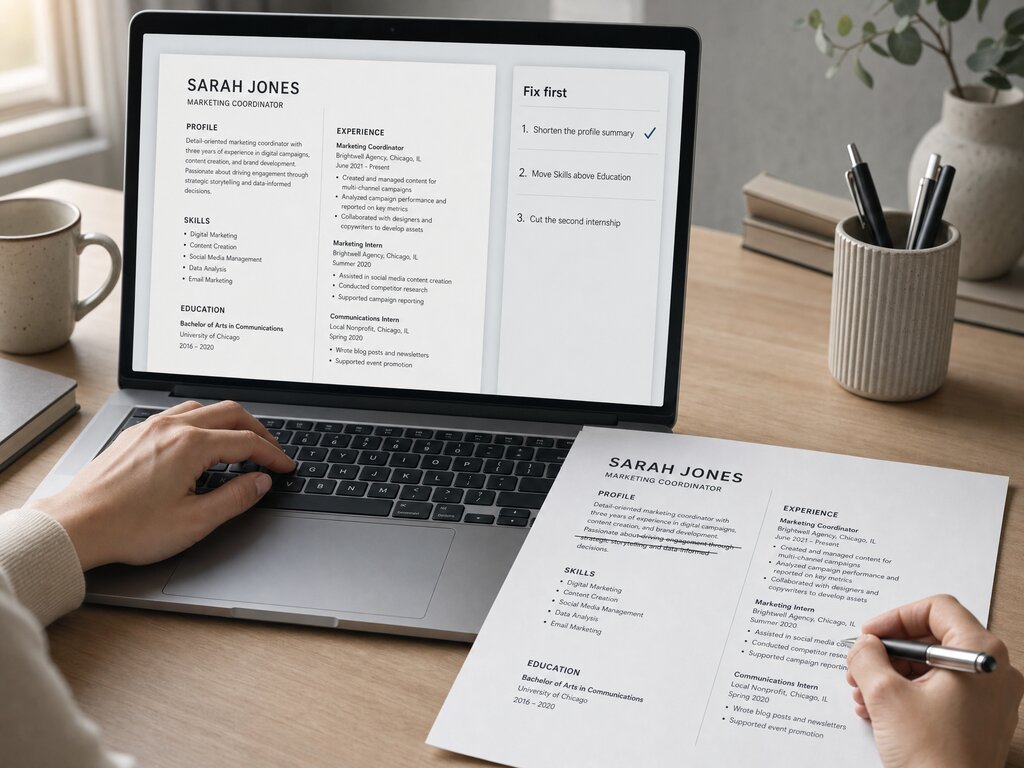
Not a chart to interpret. A short list of changes worth making, each one carrying the readings it came from.
0510152025
Did the edit work?
Compare two versions section by section, with a real significance test rather than a hunch about two averages.
051015202530
A named link per application
One link per company, so every reading arrives already labelled — and an employer record showing who has gone quiet.
051015202530
Live, while it happens
See that your CV is being read right now, and get an email the moment it is opened.
051015202530
Reader privacy
Attention only. Nothing works out who the reader is, no keystrokes, and a visible notice on every tracked CV.
Six measurements fit on a marketing page. The dashboard keeps the rest — return visits named, versions traced side by side, the record your reader actually left.
Everything above is a worked example. The product is your own reading, and it starts on the first link you send.
In every report
Three signals, one reading.
Dwell tells you what held them. Re-reads tell you what they were not sure about. Drop-off tells you where the CV stopped being read at all — and the third one is usually the one that changes what you write next.
Seconds per section, measured while the section is actually on screen. The current role holding 38 seconds and Education getting three is the difference between a CV that works and one that does not.
05101520253035
Re-reads — what they doubted
A recruiter scrolling back to a paragraph is a stronger signal than one dwelling on it once: something there mattered enough to check twice. Usually a date, a gap, or a claim that needed a second look.
051015202530
Drop-off — where reading stopped
The point past which nothing was reached. Everything below it is costing you space and earning nothing, and until you can see it you have no way of knowing which half of the page that is.
How it works
Ten minutes to set up. Then it works while you do something else.
You do not have to change how you apply. Build the CV once, send a link instead of an attachment, and the report is waiting the next time someone opens it.
05101520253035
01
Build or import
Start from a template, upload an existing CV, or import your LinkedIn export.
What you see
051015202530
02
Share a tracked link
Send one link per application instead of an attachment you never hear about again.
What you see
051015202530
03
Read the trace
Watch which sections hold attention and which get skipped.
What you see
05101520253035
04
Fix what it tells you to
A ranked list of changes worth making, each with the readings behind it — then compare versions to see whether the edit actually worked.
What you see
Templates
Start from a page recruiters already read.
Every template, across every base layout, is parseable by an applicant tracking system and instrumented, so whichever you pick still tells you how it was read. Pick by the job you are applying to, not by which one looks nicest — and change your mind later without rebuilding anything.
No, and the design is what makes that answer hold rather than the promise. We record which sections of your document were on screen and for how long. Nothing tries to work out who the reader is — no fingerprinting, no lookup, no matching against a profile — and the attention is stored against the document rather than against a person, so there is no profile of a recruiter anywhere in the system to build one from. The one way a name can appear is a card on the document that asks the reader whether they want you to know they read it. They are free to ignore it, and most will.
Compare that to the usual approach: most document-tracking tools make the reader hand over an e-mail address before they can open the file at all. We require nothing.
Yes. Every tracked CV carries a visible notice — not a footer nobody reads, an actual notice on the document — saying that reading is measured, what is measured, and how to stop it. Hiding it would make the whole thing indefensible, and it would also be pointless: the value here is knowing what a recruiter did, not doing it behind their back.
In one click, with no account, no form and no e-mail to anyone. If their browser sends a Global Privacy Control or Do Not Track signal we honour it automatically before they arrive, and we do not offer ourselves a way to override that. Tracking runs on legitimate interests rather than consent, which means the right to object has to actually work — so we built it so that it does.
The time your CV was opened and for how long, seconds spent on each of ten sections, scroll depth, re-reads, the order the sections were read in, which of your links were clicked, which application link was used, device type, browser name, operating system, the page that linked to it, and the country the request came from. That is the list, and we keep it current rather than short. Nothing tries to work out who the reader is — but the viewer does offer them a card to say so if they want to, and if they fill it in you get exactly what they typed and nothing more. Not recorded, at any point: fingerprints, a city or any location narrower than a country, the IP address itself, browser version, screen size, other tabs, browsing history, or anything at all after they leave your CV.
Because a PDF has pages and no sections. A tracked file can tell you someone spent forty seconds on page one — and a CV is page one, so that number is just the session length wearing a different label. A hosted page knows that the block being read is your current role, which is the only version of this that tells you what to change.
There is a practical reason too: pixel-tracked PDFs are trivially stripped by opening and re-exporting the file, and job seekers are actively being taught to do it.
The PDF you download is a normal, parseable PDF with selectable text and no tracking in it — that is the file you send when an application form demands an upload. The tracked link is for the times you e-mail a person directly, which is where a link works and an attachment tells you nothing. You get both from the same CV.
Everything above is documented in full on our transparency page, which is also where a recruiter can switch tracking off in one click without an account.
Why not next month
Every application you send untracked is evidence you can never get back.
There is no way to find out later how the CV you sent last Tuesday was read. The reading only exists if something was measuring while it happened. Whatever you send this week is either a data point or a guess, and you decide which one before you send it — not after.
051015202530
You are going to rewrite it anyway
Everyone does, several times, over a search that runs for months. The only real question is whether the next version comes from evidence or from a hunch — and that costs you nothing extra to decide.
05101520253035
The first read is the one worth having
The most useful trace you will ever get is from an application you actually care about. Start before the job you want appears, not after you have already sent it the untracked version.
051015202530
Free is where you build it
One CV, a real PDF download with no watermark, no card and no auto-renewing trial. One tracked link too, with the whole reading report on it — so the record starts on your first application rather than on your first invoice.
Why the x
Solve for x.
You know what you sent. You know what came back — usually nothing. The unknown has always been the part in between: what the person on the other end actually did with it. That is the x, it is the last letter of our name, and this is the only product that solves for it.
Between the send and the silence
You sent it
Tue 09:14
Nothing came back
No reply, 11 days
24h, to scaleFirst 24 hours, to scalethen 11 daysthen 11 days of nothing
+6h+12h+18h09:4714:1208:30silence
x
Eleven days, and no way to know what happened in them.
15 of 100 readings got no further than Experience — current.
Three opens on the clock, inside eleven days that felt empty. Example report.
Send the next one knowing.
Build your CV, share one link instead of an attachment, and read what the recruiter actually did with it. Building takes about ten minutes and the first CV is free, along with one tracked link to read what came back.